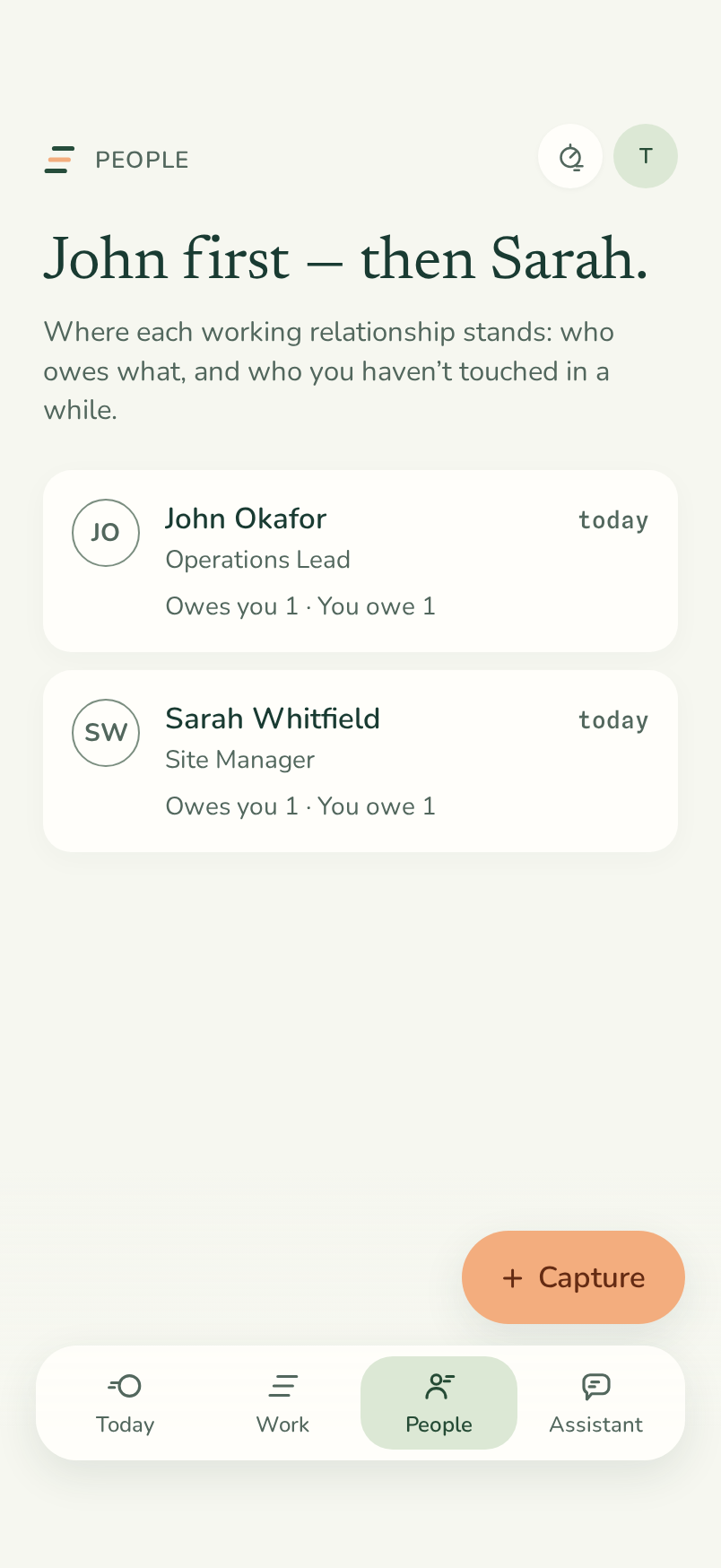
They appear from the work
A person becomes a person in Zephyr the moment an extraction names them. You never sit down to enter anyone.
Most coordination is not a task, it is a person. Zephyr keeps a running balance of every working relationship — what they owe you, what you owe them, and how long it has been quiet.
A contacts list sorted A–Z tells you nothing. This one puts the person with something overdue between you at the top, then the person you have waited on longest, then the relationship that has gone quiet.
Every line is the same three facts: what they owe you, what you owe them, and when anything last moved. No pipeline stages, no deal values, no fields to keep tidy.
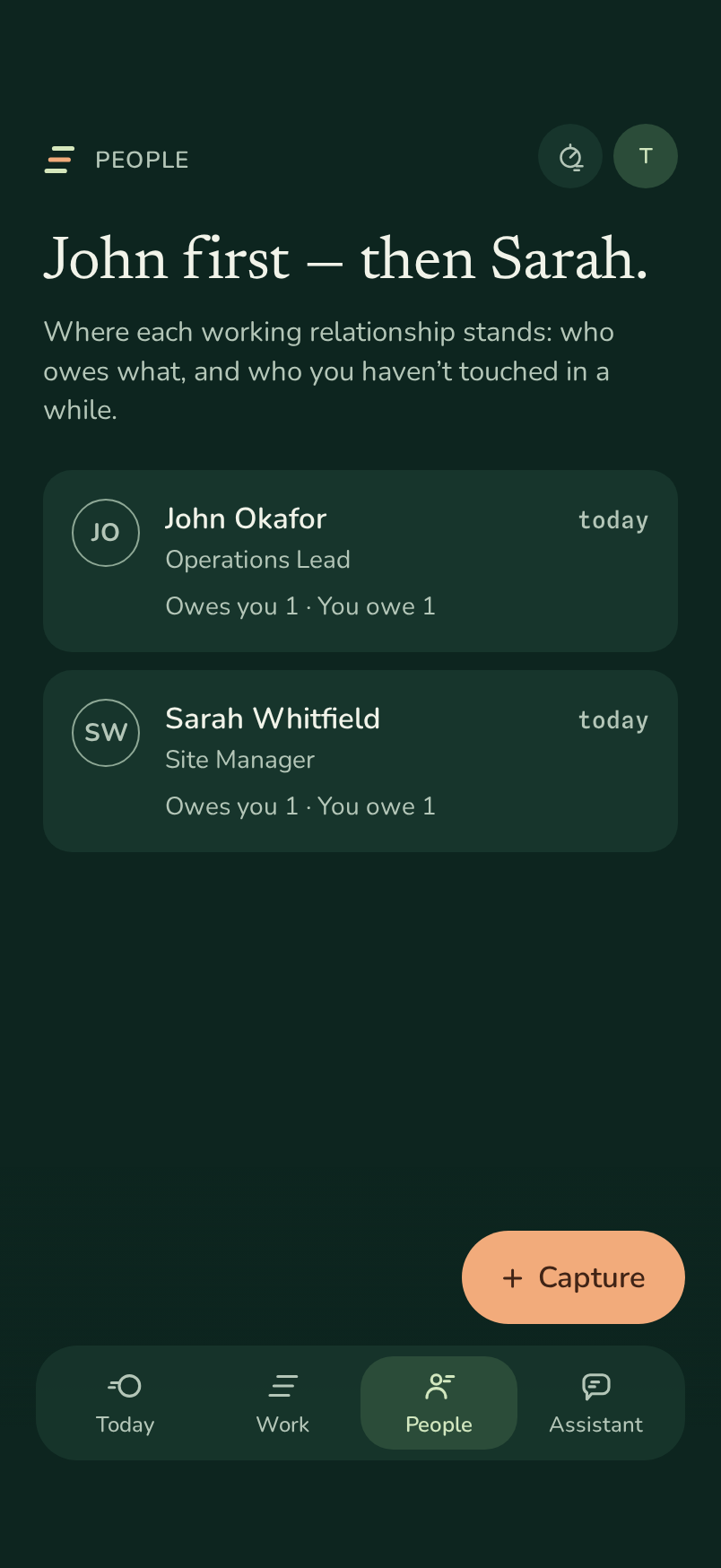
People appear because they were named in your work. There is no import step, no "add contact" chore, and nothing to keep up to date — the balance is derived from the actions you already have.
A person becomes a person in Zephyr the moment an extraction names them. You never sit down to enter anyone.
Actions you are waiting on, attributed to them, are what they owe you. Your own open actions naming them are what you owe. Both directions, one line.
After a fortnight with nothing moving, a relationship is flagged as gone quiet — the point at which "busy" starts reading as "forgotten".
Open a person and you get the narrative: what has passed between you, in order, rather than a second copy of your task list filtered by name.
Connect a calendar and the brief arrives before you talk, not after you ask: who is on the invite, and what is outstanding with each of them.
"What did I promise Sarah?" is a question the assistant answers from these records — or says it has nothing recorded, rather than guessing.
Nobody stops you in a corridor to ask about ticket 4,417. They ask whether the referral went through, whether Maple Court came back, whether Sarah ever sent the rota. Those are questions about a relationship, and a list of tasks is the wrong index for them.
So the People tab is not a directory with work attached. It is the work, indexed by the person you will be asked about — which is the index your memory was using anyway.
Zephyr is in development for iOS and Android. Join the early access list.