Voice
Hit record on the way out of a meeting or between appointments. The audio is stored as the original record of what was said.
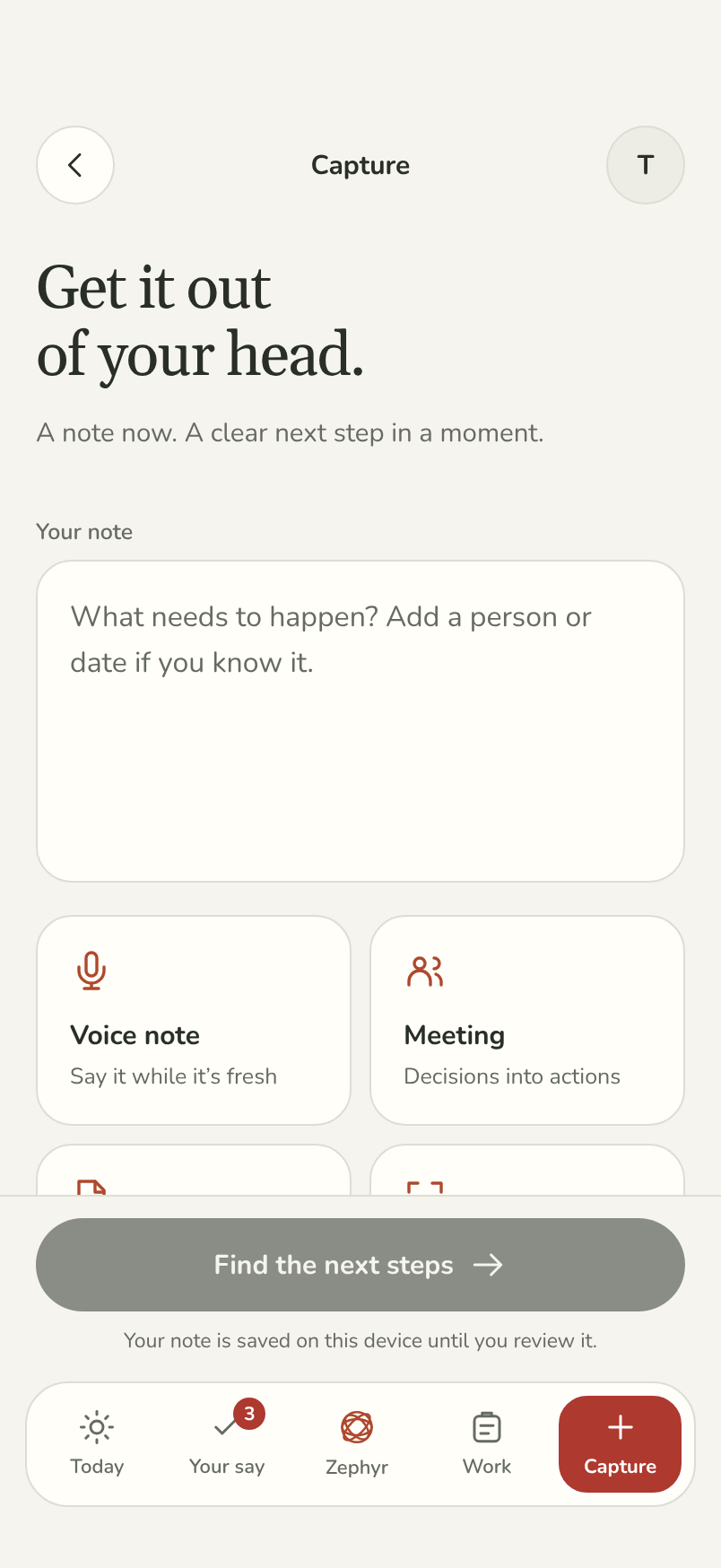
Voice, scan, file, note or shared content. One pipeline stores the original, reads it, and proposes what it means — and the original stays attached to whatever it produced.
You record forty seconds on the way to the car. This is the review screen you get: the transcript, what it thinks the actions are, what it was unsure about, and nothing saved until you say so.
Zephyr tells you what it was unsure about rather than scoring itself. A reading it is confident in arrives ticked; one it is not names the field to check — the owner, the date, the wording — and waits unticked. Below its floor it says it does not know rather than guessing at a date.
Whatever the input is, it takes the same path: store the original, read it, classify it, pull out the entities, identify the actions, judge how sure it is, propose — and wait for you.
Hit record on the way out of a meeting or between appointments. The audio is stored as the original record of what was said.
Photograph a form, a signed page, a whiteboard or a printed schedule. The image is kept as the source of truth behind whatever gets extracted.
A PDF quote, a spreadsheet, a contract. Attach it and it becomes searchable context attached to the work it produced.
Type or paste. The fastest capture there is, and the one most people use twenty times a day.
Forwarded emails and shared text arrive as captures like anything else, so the thread stops living only in your inbox.
Captures have states — pending, processing, processed, failed — so you can always see what Zephyr has and hasn't read yet.
A capture is not consumed by the extraction. The recording, the photo, the file and the text you typed all stay attached to the actions they produced, which means every action can answer the question "where did this come from?" months later.
That matters more than it sounds. Most task apps lose provenance at the moment of entry — someone retypes "chase the vendor" and the original message is gone. Zephyr keeps the chain intact.
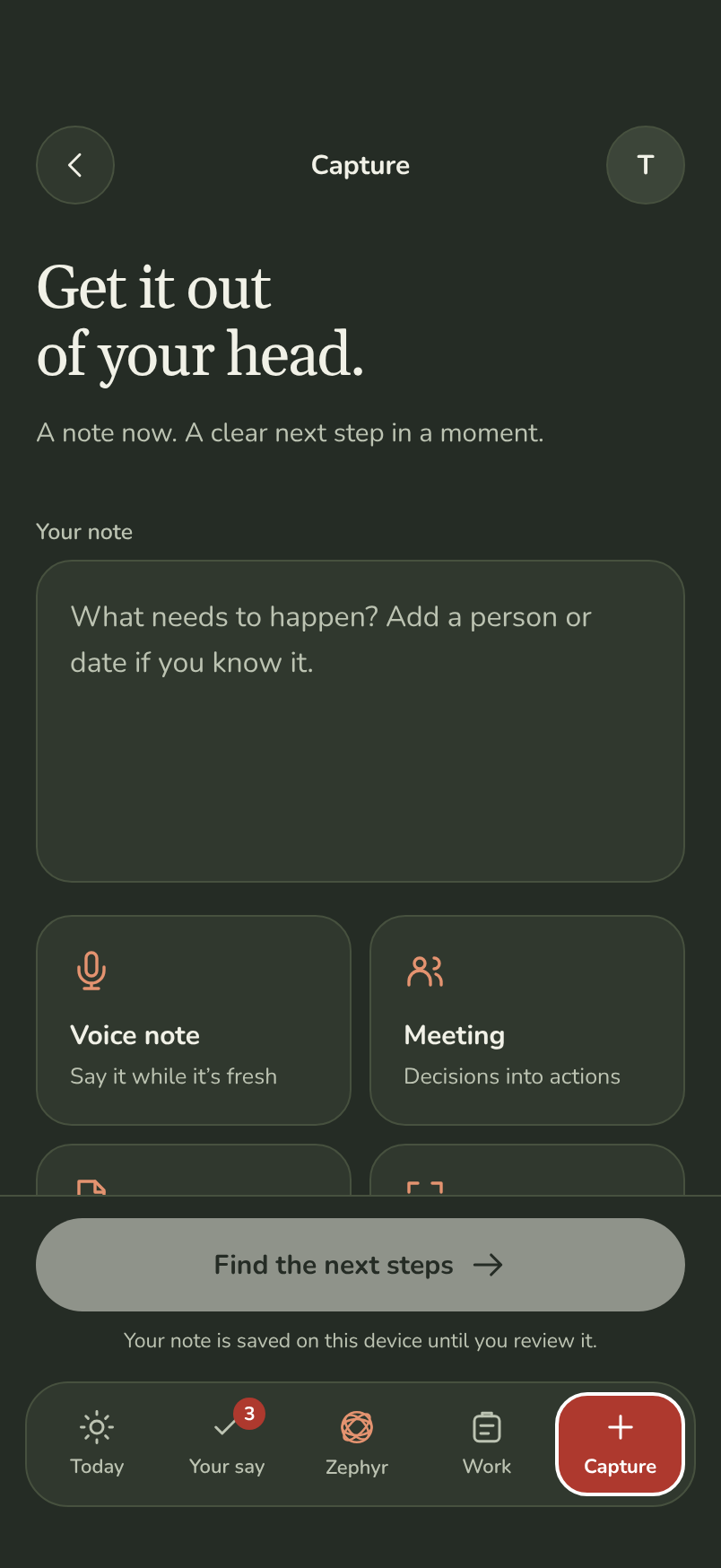
Voice, scan, file or note. The capture sheet is one screen with one primary action, because the moment you need it you are walking to a car or standing in a corridor.
Whatever you hand it, the original is stored and stays attached to whatever it produced.
Zephyr is in development for iOS and Android. Join the early access list.