Needs attention
Overdue, due today, blocked, waiting and high priority — the things that will hurt if you miss them.
Needs attention, today, waiting for, you promised, at risk — built from structured queries against your own records and written short enough to actually read.
Not a feed and not a digest of everything. The brief is capped, and the cap is the point: it has to choose, which means reading it tells you what actually matters rather than what happened.
One line at the top. Open it if you want the rest.
Late. The Thursday rota has been with Sarah for two days. A follow-up is drafted and waiting.
Today. Maple Court are expecting the revised quote before close. Nothing is blocking it.
Quiet. Four items are waiting on other people and none are overdue yet. The vendor contract came back signed.
A daily brief that takes five minutes to read is a second inbox. The constraint is the feature.
Overdue, due today, blocked, waiting and high priority — the things that will hurt if you miss them.
What's actually scheduled for the next few hours, in priority order.
What other people owe you, and how long it's been.
What you owe other people. The section most people find uncomfortable and most useful.
Work whose deadline and whose progress have stopped agreeing with each other.
The brief is generated from structured queries against your records. If a section has nothing in it, it says so rather than filling space.
The generation step never sees a pile of raw text and guesses what matters. It runs the same structured queries the app's own screens run, assembles a compact set of facts, and the model's only job is to phrase them.
That's a narrow job, and narrow jobs are where language models are reliable. It's also why the brief can't tell you about a deadline you never captured — and won't pretend to.
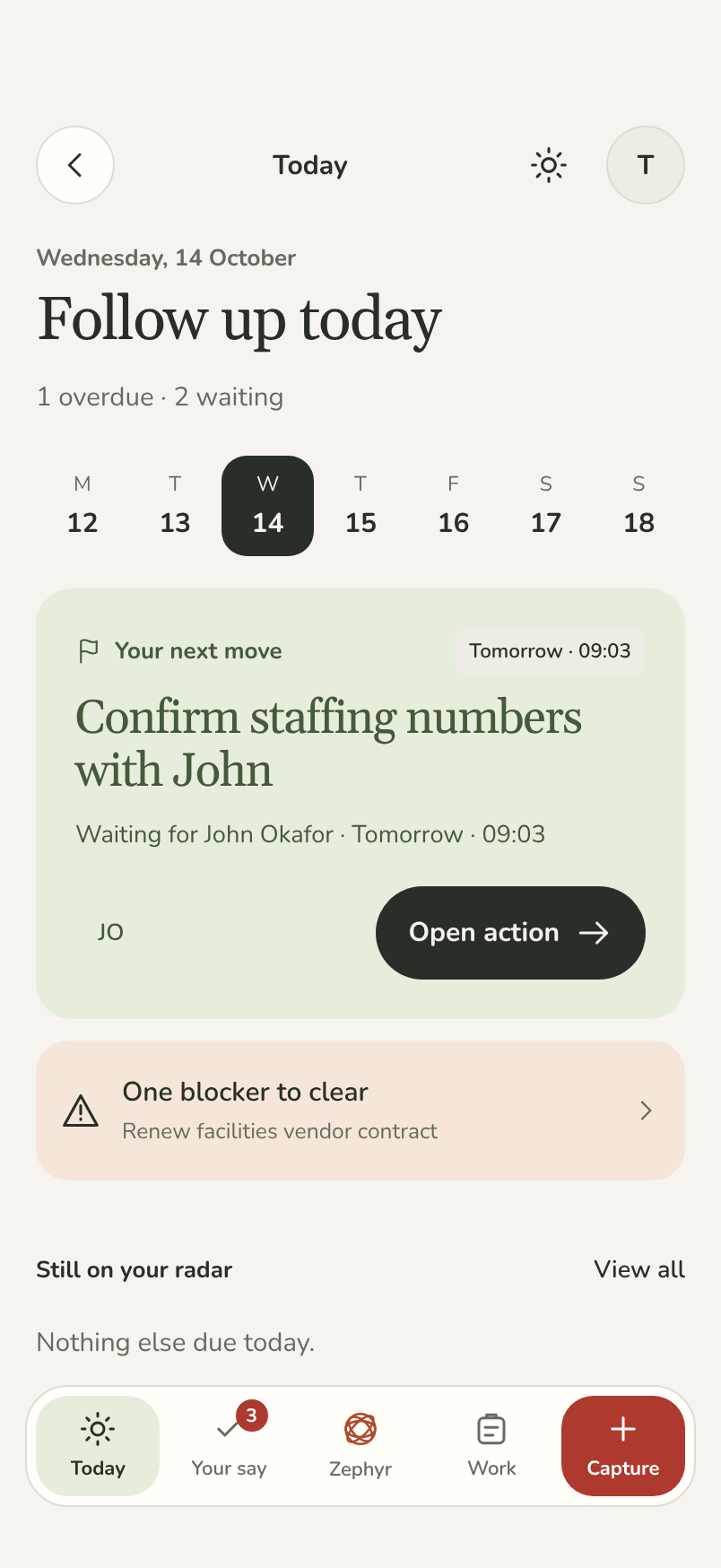
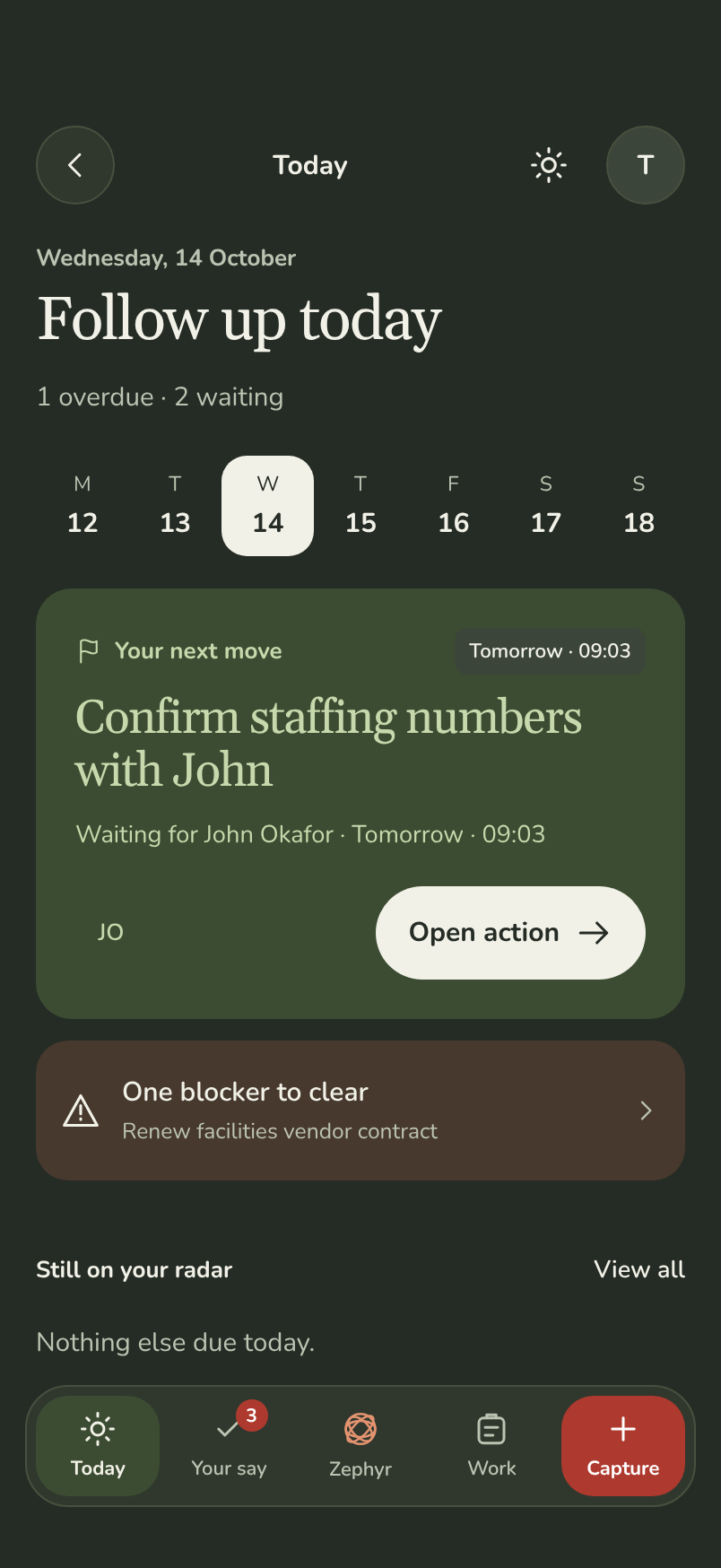
This is Today, and it is deliberately not a dashboard. One thing needs you; everything else is filed, waiting, or already handled — and it says so in a sentence before it shows you a single list.
The people you are waiting on sit under it, because that is the half of the job no task list models.
Zephyr is in development for iOS and Android. Join the early access list.